
In this article, I talk about how I went grocery shopping on a budget and challenged myself to spend no more than $250 for the whole month. With simple meals, smart planning – I reduced our grocery budget by half. Read about my experience here.
Why I took on the challenge of grocery shopping on a budget
As a dual-income family with two kids, food remains one of our biggest variable expenses. Growing up and living in Singapore, we are huge foodies and we can’t help but indulge in making delicious meals.
Even with a generous food budget, it started to feel like it was never enough. With lifestyle creep sneaking in and we often felt we “needed” premium ingredients from “better” brands to make fun new recipes. As a mum, I also felt the unspoken pressure to keep meals exciting and novel.
In Singapore, we receive vouchers from the government to help us cope with rising cost of living. Usually, my household receives $250 – $300. I wanted to find out – Could I really spend no more than $250 on groceries in a month, given our past spending trends? Were there frugal habits I could learn for myself and to share with you guys?
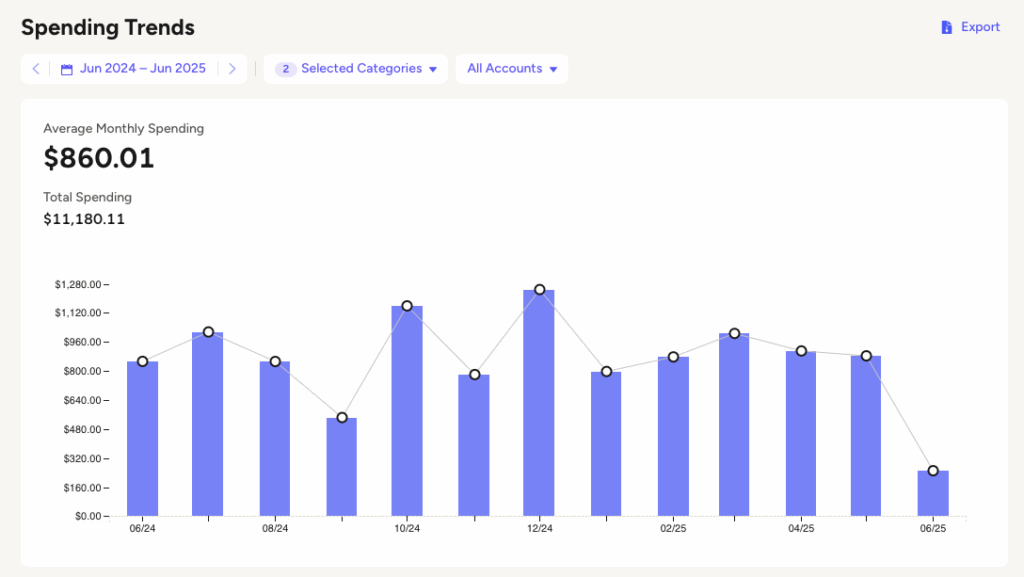
Food and meals became a way to cope with our emotions and keep up with trends. Grocery shopping even became a regular weekend family activity. We picked up “little treats” to destress after work, for the kids or to reward ourselves after a long week.
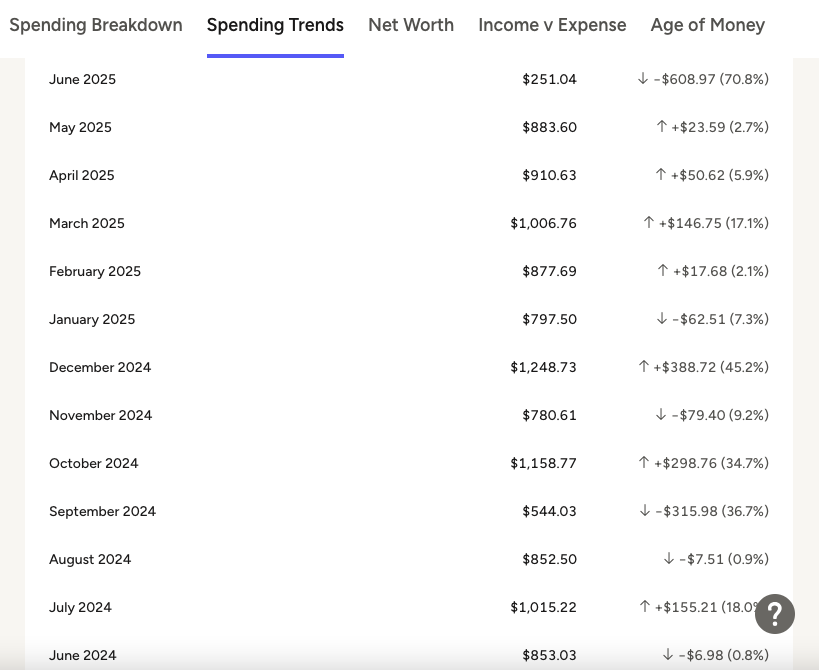
After seeing our grocery expenses range from $800 to $2000 (Dec 2023, data not shown), I found myself craving a reset to go back to simple, nourishing meals made from whole ingredients. There was a deep desire to find contentment in less – not to sacrifice our wellbeing but to be more intentional in choosing healthier, less processed ingredients with fewer additives.
I also wanted to build a foundation of healthy recipes that were so easy to make, we would not have to depend on food delivery even on busy, overwhelming days.
What the challenge of grocery shopping on a budget was all about
I gave myself one goal. Spend no more than $250 on groceries for our family of four (2 adults and 2 kids).
My guidelines were:
- Cook all of our meals (no dining out or food delivery)
- Focus on whole foods – minimally processed ingredients, no ready-made meals
- Use up what we already had in the fridge, freezer or pantry
I was not aiming to deprive us or to be extreme but I wanted to see how far I could stretch our budget without sacrificing our health or our sanity.
At the end I wanted to have a system that I could repeat and carry forward even after the month ended.
What I bought when grocery shopping on a budget
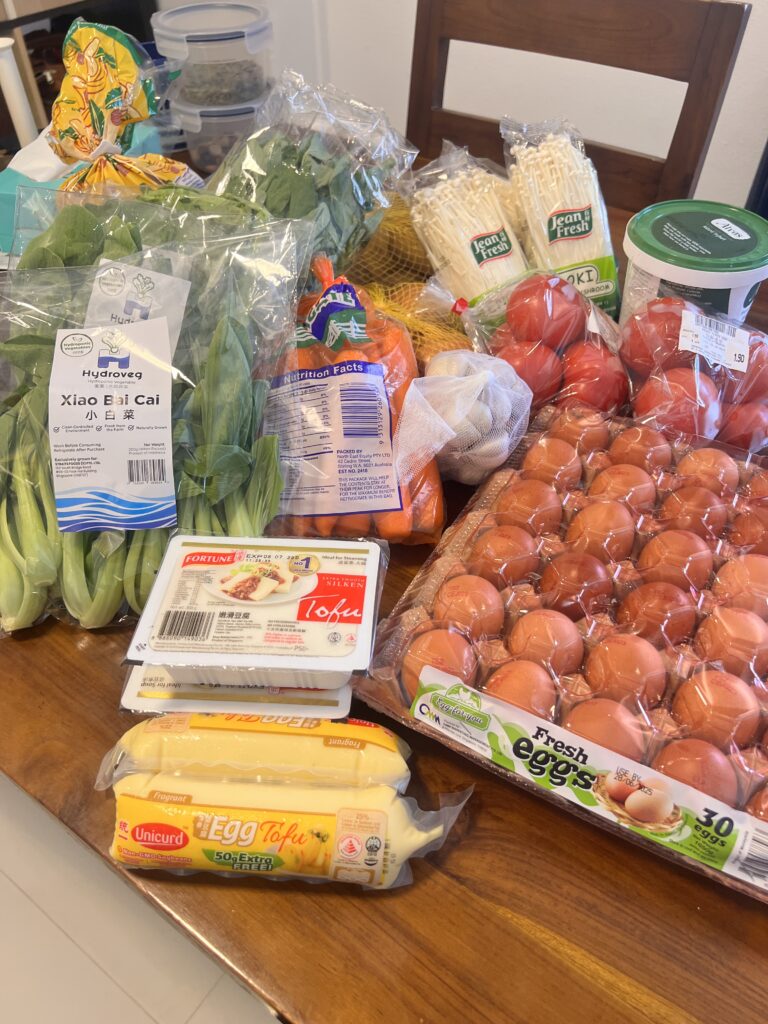
Here is my basic grocery list for the month. We also used whatever we already had at home – condiments and staples such as pasta, butter, soy sauce and salt.
Meats / Protein
- Frozen whole chicken leg (2kg)
- Frozen minced pork (1kg)
- Fresh pork muscle (500g)
- Unagi (500g)
- Silken tofu
- Egg tofu
Vegetables
- Garlic
- Onions
- Potatotes
- Carrots
- Tomatoes
- Broccoli
- Cauliflower
- Leafy greens such as spinach, xiao bai cai
- Mushrooms
Pantry staples / diary
- Rice bran oil (5L)
- Jasmine rice (5kg)
- Wholemeal banana walnut loaf
- Nuts (wholesale – almonds, walnuts, macadamia, sunflower seeds, pumpkin seeds)
- Whole bean coffee (2kg)
- UHT whole milk
- Alva’s natural yoghurt
- Dried knife-sliced noodles
- Kimchi
Simple Meal Plans that Made it Work
One of the biggest mindset shifts I had to make was to let go when grocery shopping on a budget was to create variety for the sake of novelty.
Instead of trying to create meals to “treat” ourselves or depend on meals as a form of entertainment, I stuck to 7 – 10 simple meals that we already. They were quick to make, budget-friendly and easy to tweak based on ingredients we had on hand.
Just by rotating between these few meals and swapping ingredients, we stayed within the budget. The kids kept asking for more and kept exclaiming how its the “best meal mummy made”. haha!
Most of the meals are nutrient-dense with whole ingredients, offering balanced macros to ensure that the kids nutritional needs are met. They take no time to prep at all and were comforting.
Breakfasts
🥣 Honey yoghurt bowls
→ Customisable for kids and adults alike
→ Simple, protein-rich, and toddler-approved
- Alva’s natural yoghurt ($5.50 for 1kg!)
- Drizzled with honey or maple syrup
- Topped with chopped nuts and fruits
🍞 Toasts and eggs
- Wholemeal bread
- Side of greens, cucumbers or tomatoes
- Scrambled, or fried egg
🥛 Corn flakes with milk
→ No prep needed, great for rushed mornings or when energy is low
- House brand plain corn flakes
- UHT milk whole milk
- Topped with chopped nuts and fruits for added minerals fibre
Mains (lunches and dinners)
🐔 Chicken Stew with Carrots & Potatoes
Sweetened with onions and carrots — a one-pot meal that stretches well into leftovers.
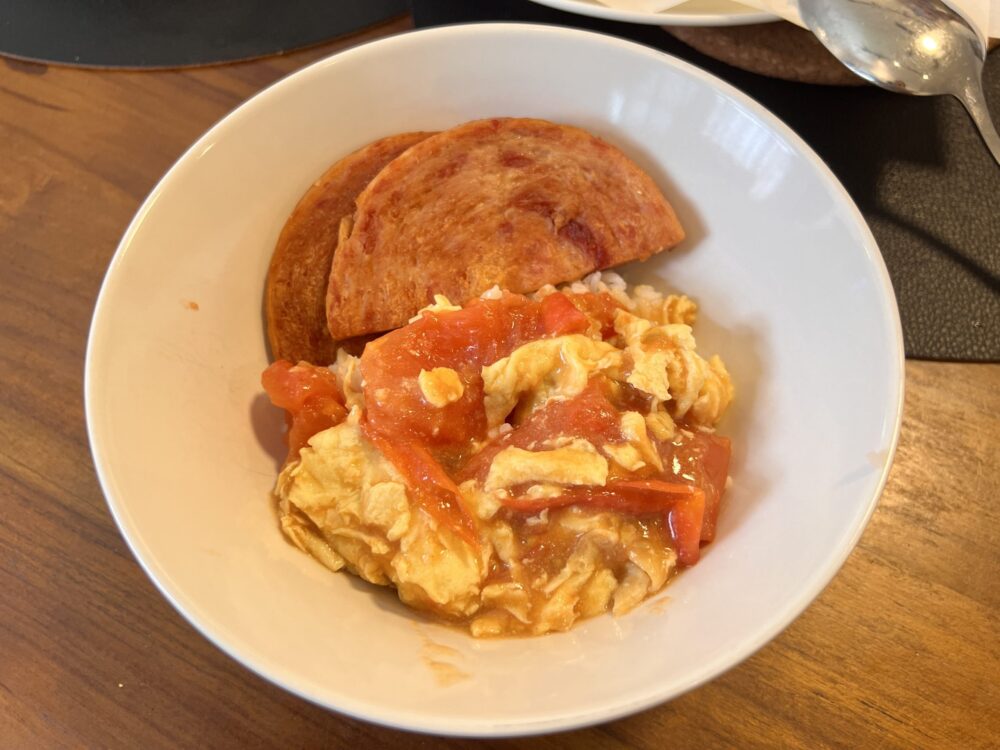
🍅 Tomato Egg Stir-Fry with Rice
A 3-ingredient favourite — soft scrambled eggs, juicy tomatoes, and a drizzle of sesame oil.
🍜 Spinach & Egg Drop Soup
Light, nourishing, and toddler-friendly. Add ikan bilis stock for extra depth.
🍝 Bolognese Pasta
Cheap, versatile and freezer friendly.
🍚 Fried Rice with Leftovers
Customisable with egg, frozen veg, tofu, or leftover meat.
🍲 Ikan Bilis Soup with Tofu & Veg
Budget-friendly and comforting — especially when served with hot rice.
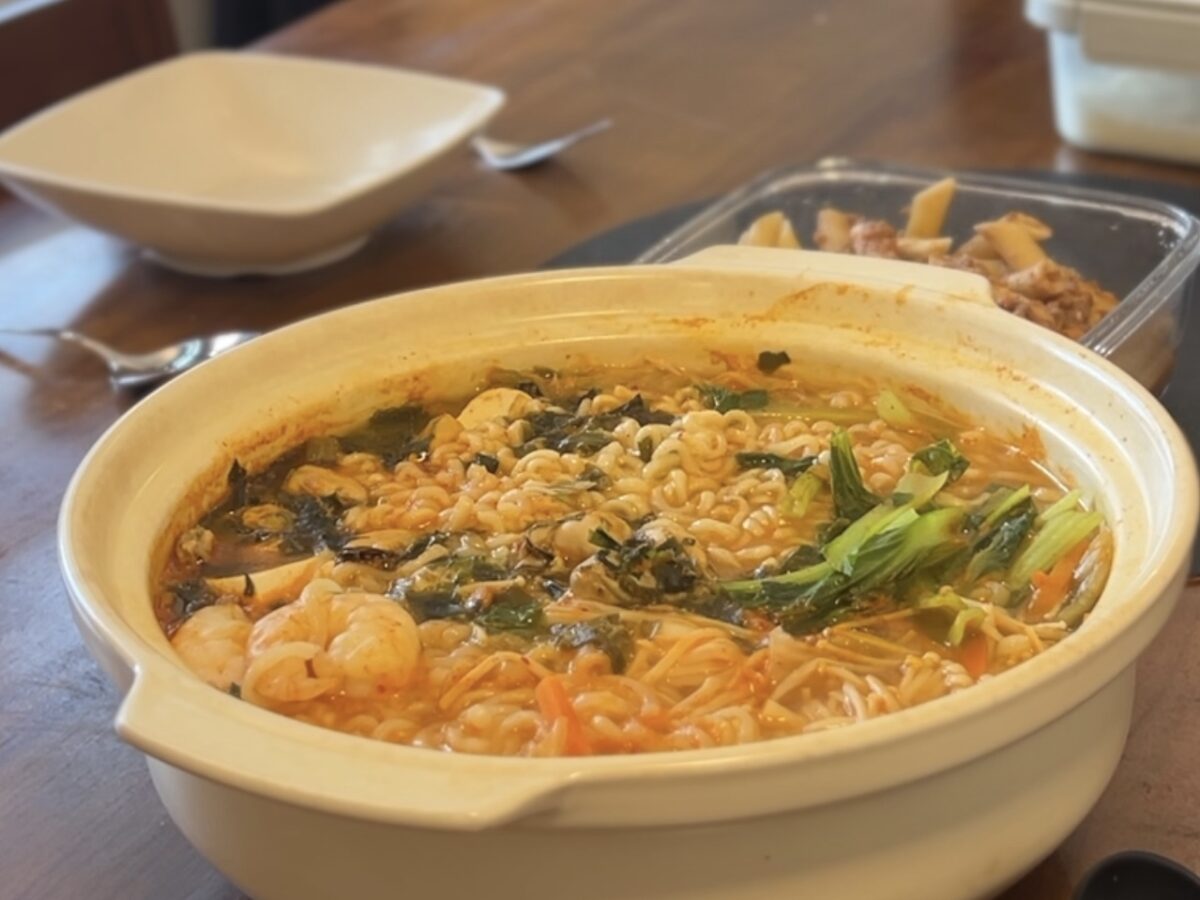
🍛 Korean Army Stew (Budget Version)
My take on budae jjigae — tweaked for local ingredients
🥣 Rice Porridge
Cooked low and slow, topped with preserved vegetables or stir-fried meat, sesame oil and spring onions.
🍜 Kid-friendly Zha Jiang Mian (Fried Minced Meat Noodles)
Savory, satisfying, and easy to batch — I keep a frozen portion ready most weeks.
Grocery Planning System – On a Budget
Having a simple 4-step system helped me consolidate my approach to grocery shopping on a budget.
1. 🥘 Have Go-To Recipes
Instead of trying to be creative every week, I stuck to my best recipes and things I was familiar with cooking. I limited the recipes to no more than 5 ingredients and rotated between different types of meats and vegetables to provide variety and a spread of minerals and vitamins.
2. 🧄 Stick to a Few Chosen Ingredients
I simplified our grocery list by choosing versatile affordable local staples that I could reuse across meals. Frozen meats, local greens and local produce allowed me to stick to my budget while grocery shopping.
For example, just chicken and carrots can make at least 5 types of meals. Instead of buying specific ingredients for specific meals, I grocery shop by topping up ingredients that we had used up.
3. 🗓️ Plan Before I Shop
The schedule that worked out for me was to top up frozen meats once a month and fresh fruits and vegetables (esp leafy greens) weekly or fortnightly. I stick to the same supermarket so I got familiar with their sales cycles.
When shopping online, I bought in bulk during sales periods and made full use of vouchers and discounts.
With fewer trips and a specific list in hand, I didn’t window shop or browse the supermarket aisles for ideas. So, I bought fewer items, had less waste and of course saved money.
I bought what I needed until the next grocery trip.
Instead of having a rigid system with specific meals planned on specific days, my aim was to keep my pantry and fridge stocked with enough frugal local ingredients that could allow me to whip up an easy meal in 30 minutes. I would buy just enough till the next grocery trip.
4. 🍱 Cook in Bulk (But Keep It Simple)
One of the biggest time and budget savers I used was cooking once, eating twice.
I just made extra portions of go-to recipes above we already loved.
- Extra chicken from stew → sandwiches, wraps, fried rice, porridge
- Stir-fried minced pork → topping for porridge, rice or noodles
- Stock → base for soups, noodles or porridge
- Extra rice → fried rice, congee, unagi bowls
- Bolognese sauce → pasta, pizza topping, lasagne
This helped reduce cooking stress on tired nights and gave me breathing room during the week especially on days I just wanted to chill after work.
Final Thoughts: Is grocery shopping on a budget possible in Singapore?
We ended up spending $460 in total in June. $210 in CDC vouchers and $250 in cash.
It included our bulk purchases of $151 such as
- cooking oil (5L, $24)
- nuts (3kg, $50)
- Jasmine rice (5kg, $15)
- coffee beans (2kg, $50)
- Laundry detergent (1.6kg, $6)
- Laundry softener (3.2L, $6)
In total, we spent $309 on groceries (meats, vegetables, eggs, bread etc) for about 4 weeks worth of meals for a family of 4 (2 adults and 2 kids).
Was it worth it? Absolutely.
We saved money but the real win was deeper because we found that we could enjoy good healthy meals without feeling deprived with much less than we thought we needed. The confidence that we can do it repeatedly without feeling restricted gave us a lot of hope for the future, especially when we live in these times of high inflation.
This challenge helped me see that budgeting doesn’t mean going without. Being frugal doesn’t mean being stingy. Instead, being intentional with how we grocery shop allows us to stay within budget.
From a financial viewpoint, this means resources can be reassigned to other purposes such as investing, saving up for splurges that bring memory dividends such as family holidays and experiences with the children.
💛 Ready to Try This for Yourself?
If you’re tired of overspending on food and want a system that actually works — not just for one month, but over and over — start here.
I’ve linked everything that helped me:
📋 Habits that help me save money
🛒 My go-to grocery list
📝 Printable meal planning worksheets
🍽️ Budget-friendly recipe ideas
📎 Favourite tools I use in the kitchen